

How to Start Working Out at Home: Step-by-Step Guide for 2026
How to Start Working Out at Home: Step-by-
Step Guide for 2026
Have you ever wondered if your living room could actually replace pricey gym costs? Most people believe heavy machines are needed, but science says no. Hitting health goals depends on effort, not monthly fees.

Starting new workout routines in your home makes every workout session efficient. This beginner friendly approach provides one smart way towards building real strength. Using this clear plan, you boost fitness levels without leaving your house.
This guide provides a detailed roadmap regarding your transformation. We cover setting goals and mastering core exercises while tracking progress. Prepare to redefine what personal space can do for health.
Key Takeaways
- Home exercise improves cardiovascular health significantly.
- Eliminate gym fees and travel time easily.
- Consistency creates measurable strength gains over time.
- Basic movements provide solid foundations for progress.
- Realistic goals sustain daily motivation and focus.
- Planning ensures long-term success without extra gear.
Why Starting Your Home Workout Journey in 2026 Makes Sense
Many people are discovering that home-based training offers better long-term results than any local health club. Setting up a private space allows you to focus entirely on your personal health without the distractions of a crowded facility. This shift toward personal spaces ensures that your workout remains a consistent part of your daily life.
The Science Behind Home Fitness Success
Science proves that you do not need a massive gym to live longer. A major study from the American Heart Association shows that consistent exercise links to a 19-25% decrease in mortality. This evidence establishes regular physical activity as a primary factor for a longer life.
Physical activity remains a cornerstone of longevity and heart health for people of all ages.
Research from the Journal of Human Kinetics also supports this approach. It shows that progressive bodyweight training produces measurable gains in cardiovascular fitness. These studies confirm that beginners can build significant muscular strength without heavy machines.
Key Benefits: Boosting Energy, Circulation, and Conditioning
When you move your body, your circulation improves almost immediately. Every heartbeat sends freshly oxygenated blood to your limbs. This blood carries vital nutrients like calcium and water that your muscles need to function.

This process provides a natural boost to your daily energy levels. Consistent movement creates the high energy required for a busy lifestyle. You will likely feel a surge of positive energy shortly after finishing your session.
Regular exercise keeps the body in a state of conditioning rather than a deconditioned state. Muscles that lack tone or tension eventually lose their functional capacity. Consistent home routines transform these tissues into well-developed, metabolically active assets.
Cost-Effectiveness and Ultimate Convenience
The online fitness market will likely hit $59 billion by 2027. Beginners drive this growth because they find bodyweight exercises more approachable and affordable. You can start today with zero financial investment and still see professional-grade results.
You save significant time by eliminating the commute to a distant facility. There are no lines for equipment or crowded locker rooms to navigate. This convenience makes it much easier to stick to your workout schedule over several months.
Home routines protect your health without the high price of monthly memberships. You gain total control over your environment, music, and pace. This freedom helps you build a sustainable habit that lasts for years.
| Feature | Home Workout | Traditional Facility |
|---|---|---|
| Monthly Cost | $0 - $20 | $50 - $150 |
| Commute Time | Zero Minutes | 20 - 45 Minutes |
| Privacy Level | High | Low |
| Equipment Wait | None | Frequent |
Setting Effective Fitness Goals for Your Home Routine
Transforming your living room into a gym requires a clear roadmap of specific milestones. Vague aspirations like "get fit" often fail because they lack the structure needed for long-term progress.
By defining what you actually want to achieve, you create a sense of accountability for your daily actions. This clarity turns a simple activity into a dedicated mission for self-improvement.
Using SMART Goals for Workout Success
The SMART framework stands for Specific, Measurable, Achievable, Relevant, and Time-bound. This system helps a beginner turn a fuzzy idea into a concrete action plan.
For example, instead of saying you want to "get stronger," try a more defined target. You could aim to "complete 10 full consecutive push-ups with good form in 8 weeks."
Setting goals is the first step in turning the invisible into the visible.
Assessing Your Current Fitness Level
Before you start any workout, you must know your starting level. Conducting baseline tests allows you to track how your body changes over time.

Try timing a one-mile walk at a brisk pace or measuring your maximum plank hold duration. You can also record how many push-ups you can finish with proper form to establish your starting point.
Common Beginner Goals and How to Achieve Them
Many people start a home routine to boost their energy for daily activities or improve heart health. A great beginner milestone is completing 30-minute continuous cardio sessions without stopping.
Focusing on functional strength also helps with everyday tasks like carrying heavy groceries. These goals keep you motivated and give every workout session a clear sense of purpose.
| Assessment Test | Measurement Metric | Target Beginner Goal |
|---|---|---|
| One-Mile Walk | Time (Minutes) | Complete in under 15 minutes |
| Plank Hold | Duration (Seconds) | Hold for 60 seconds with form |
| Push-Up Capacity | Total Repetitions | 10 full consecutive reps |
| Cardio Stamina | Active Minutes | 30 minutes without resting |
Understanding Basic Fitness Principles Before You Begin
Success in your home journey starts with a solid grasp of how your body actually adapts to physical stress. These core rules ensure your program stays effective and safe throughout the year. By learning these basics, you prevent common mistakes like overtraining or hitting early plateaus.
The FITT Principle Explained
The FITT Principle serves as a professional framework for any successful training plan. It stands for Frequency, Intensity, Time, and Type. For beginners, a Frequency of 3-4 workout sessions per week works best to build a habit.
Maintain a moderate Intensity where you can still hold a short conversation. Aim for a time of 20-35 minutes per session to keep things manageable. Your exercise type should ideally mix bodyweight movements with light cardio for the best results.
Progressive Overload for Continuous Results
To see lasting changes, you must apply progressive overload to your routine. This means making your routines slightly more challenging over days and weeks to force adaptation. Constant challenge is the key to physical evolution.
You can increase the difficulty by adding repetitions or shortening your time spent between sets. This method helps you build strength without needing expensive gym equipment. It ensures you keep moving forward rather than staying at the same level.
Why Rest Days Are Non-Negotiable
Many beginners think more is always better, but your body actually improves during recovery. Muscle growth and fitness gains happen while you rest, not during the active workout itself. Professional athletes treat their recovery as seriously as their performance.
Taking scheduled days off prevents injury and persistent fatigue. Skipping these rest periods often leads to overtraining and stops your progress entirely. Trust the process and allow your muscles the space they need to rebuild stronger.
| FITT Component | Beginner Guideline | Key Benefit |
|---|---|---|
| Frequency | 3-4 sessions per week | Builds consistency without burnout |
| Intensity | Moderate effort | Ensures safety and heart health |
| Duration | 20-35 minutes | Fits into a busy daily schedule |
| Type | Strength and Cardio | Develops a well-rounded physique |
Creating Your Home Workout Space and Choosing Equipment
Designing an effective exercise environment at home does not require a massive budget or a professional setup. You can achieve incredible results by simply prioritizing a clear area and selecting a few versatile tools. A well-organized strength training environment helps you stay focused and minimizes distractions during your session.
Bodyweight Training vs. Weight Training
Bodyweight exercises are the perfect starting point for any beginner. They allow you to master fundamental movement patterns without spending any money upfront. Most people should focus on these movements for the first 1-4 weeks to build a solid foundation.
If your primary goal is to maximize muscle growth, weight training will eventually become necessary. It is generally recommended to introduce external resistance about 3-4 weeks after starting your program. This timeline ensures your joints are prepared for the added stress of strength training.
The transition from bodyweight moves to lifting should be gradual and controlled. Master the form first to ensure long-term safety. Once the basic moves feel easy, you are ready to add more resistance to your routine.
Essential Equipment for Beginners

You do not need an expensive plan to begin seeing changes in your physique. However, investing in adjustable dumbbells for home gym use is one of the smartest moves for long-term progression. These tools allow you to increase the weight as you get stronger without taking up much space.
Beginners often find that adding weights after 8-12 weeks of consistent training keeps the workouts challenging. A good rule of thumb is to increase the load by 10-20% every two weeks. This training method ensures progressive overload while protecting your tendons and ligaments from overexertion.
Resistance Bands and Other Budget-Friendly Tools

If you have limited storage, a resistance bands set for beginners is a fantastic, affordable alternative. These bands provide variable tension that challenges your muscles throughout the entire range of motion. They are lightweight and can be tucked away in a drawer when not in use.
Bands are excellent for adding resistance to bodyweight movements like squats or rows. They offer a unique feel compared to traditional iron weights. Many users find them helpful for improving mobility and stabilizing smaller muscle groups.
Space Requirements and Setup Tips
You only need a space roughly the size of a standard yoga mat to get started. Look for a spot where you can extend your arms and legs fully without hitting any furniture. Having a dedicated area helps psychologically reinforce the habit of daily movement.
Keep your gym area friction-free by having your gear ready to go before you start. A clutter-free environment removes common excuses and saves time during busy mornings. Even a small corner of your bedroom can function as a private sanctuary for your fitness journey.
Warming Up: Four Essential Pre-Workout Routines
Igniting your physical engine requires a systematic approach to ensure you stay injury-free. Spending just five minutes before your workout session is non-negotiable for beginners. This brief window gradually raises your heart rate and delivers vital oxygen to your muscles.
A proper routine also prepares your nervous system for the physical demands of the day. If you skip this, you risk poor form or acute injuries that could stop your progress. Investing those five minutes now builds resilience and improves the quality of every movement that follows.
Foam Rolling Techniques for Muscle Preparation
This technique is a proven way to reduce stiffness before you start moving. Using a foam roller for muscle recovery increases your range of motion and minimizes future soreness. It is a proactive way to address tension before it limits your session.
Spend 30 seconds on each side for areas like your thoracic spine and glutes. This method primes your body by smoothing out tight spots in the fascia. It ensures your body is ready for deeper ranges of motion.
Static Stretches to Reduce Stiffness
Briefly holding a position helps reduce existing muscle tightness. Aim for 10 to 15 seconds per side for each of these stretching moves. You want to feel a gentle pull without any sharp pain.
Try a forearm stretch for your arms or a hurdler stretch for your hamstrings. A seated rotation stretch is also great for targeting the IT band. Do this before you begin more active exercises to ensure your limbs feel loose.
Dynamic Stretches for Joint Mobility
These movement-based warm-up routines activate your joints and muscles at the same time. Perform five repetitions per side to boost your overall mobility. This approach mimics the patterns you will use during the main workout.
Try clamshells for your hips or half-kneeling windmills for thoracic rotation. Open book movements are also excellent for full-body preparation. These movements focus on long-term mobility and better movement patterns.
Heart Rate Elevation Exercises
The final phase of your prep involves 30-second intervals of high-energy exercises. Use jumping jacks or mountain climbers to literally warm your body from the inside out. Strong cardiovascular preparation is the key to peak performance.
This step primes your heart and cardiovascular system for the upcoming challenge. Short bursts of these exercises ensure you are fully ready to perform at your best. You are now prepared to move with power and precision.
Your Essential Exercise Toolkit: Core Movement Patterns
To build a solid fitness foundation, you must focus on the five primary movement patterns that use your entire body efficiently. These movements allow you to work multiple muscle groups at once, which is the best way for beginners to see fast progress. Focusing on these compound actions ensures you develop functional strength rather than just isolating small areas.
Pushing Movements: Push-Ups and Variations
Pushing actions move your body away from an object or push an object away from you. This targets your chest, shoulders, and triceps muscle groups simultaneously. For beginners, start with wall push-ups to learn the basic mechanics and reduce the load on your joints.
As you get stronger, you can advance to incline push-ups by placing your hands on a sturdy counter or couch. Eventually, you will progress to knee-supported versions on the floor. Always keep your elbows at a 45-degree angle to protect your shoulders from strain.
Pulling Movements: Bodyweight Rows and Alternatives
Pulling exercises are vital for balancing the work you do with your chest and shoulders. These actions bring your body toward an object, strengthening your back and biceps. You can perform bodyweight rows by using the edge of a very sturdy dining table.
If you lack a table, try doorframe rows by gripping the sides of an open door and leaning back. These exercises help improve your posture and keep your shoulders healthy. They provide a necessary counter-balance to the daily habit of leaning forward at a desk.
Squatting Movements for Lower Body Strength
The squat is the king of leg movements, requiring you to bend at the knees and hips. It is essential to maintain proper form by keeping your chest up and weight in your heels. Start with assisted bodyweight squats by holding a doorknob for balance as you sit back.
Once you feel stable, try chair squats where you slowly lower yourself until you tap a seat before standing. This teaches your brain the correct depth for a full range of motion. Eventually, you can perform unassisted squats with your arms held out in front for stability.
Hinging Movements: Glute Bridges and Hip Raises
Hinging involves bending at the hips with a straight back to target the posterior chain. These exercises are crucial for building lower body strength in the glutes and hamstrings. The glute bridge is the perfect starting point because it is safe for the lower back.
Lie on your back with your knees bent and feet flat on the floor. Squeeze your glutes and lift your hips toward the ceiling until your body forms a straight line. This simple action prepares you for more complex movements like deadlifts later in your journey.
Core Bracing Exercises: Planks and Holds
A strong core is about more than just six-pack abs; it provides stability for your entire spine. Bracing involves firing your core muscles to keep your trunk rigid during movement. The plank is the most effective exercise for building this specific type of endurance.
Beginners can start on their knees to ensure they maintain a perfect form without sagging. Aim to hold the position for 15 to 30 seconds for your first few reps. As you improve, move to your toes and focus on keeping a straight line from your head to your heels.
Quality over quantity is the golden rule of home fitness. Performing 8 perfect squats is better for your results than doing 20 sloppy reps with poor technique.
| Movement Type | Beginner Entry Point | Intermediate Progression | Strength Focus |
|---|---|---|---|
| Pushing | Wall Push-ups | Incline Push-ups | Chest & Triceps |
| Pulling | Doorframe Rows | Table Rows | Back & Biceps |
| Squatting | Assisted Squats | Chair Squats | Quads & Glutes |
| Hinging | Glute Bridges | Hip Raises | Hamstrings |
| Bracing | Knee Plank | Full Plank | Core Stability |
How to Start Working Out at Home: A Step-by-Step Guide for
2026
Embarking on a new exercise path in 2026 is easier when you follow a structured, week-by-week approach. This roadmap helps every beginner build momentum without feeling overwhelmed by complex movements. By establishing a consistent routine, you turn fitness into a natural part of your daily life.
Success at home depends on a balanced plan that mixes effort with intentional recovery. You do not need a fancy gym membership to see real progress in your physical health. Following a clear schedule allows you to focus on form and sustainability from the very first day.
Week 1: Building Your Foundation
The first week is all about creating the habit of movement. Your goal is to introduce your body to consistent training without pushing too hard too soon. This foundation ensures your muscles and joints adapt safely to new stresses.
Day 1: 25-Minute Beginner Strength Workout
Kick off your journey with a 25-minute strength session. Focus on mastering fundamental movement patterns to build a solid base. Keeping the time short makes it much easier to stay committed when your schedule gets busy.
Day 2: Treadmill or Walking Workout
Focus on cardiovascular health today through a steady walking workout. You can use a treadmill or head outside for some fresh air. This activity improves circulation and helps your muscles recover from the previous session.
Day 3: EMOM Strength Building Session
Try an Every Minute On the Minute (EMOM) format to maximize your efficiency. This training style uses built-in rest periods to keep your heart rate elevated. It is a great way to learn structure while improving your overall endurance.
Day 4: Cardio or Active Recovery
Listen to your body today and choose between light cardio or active recovery. This day is designed to keep you moving without adding significant fatigue. Movement helps reduce stiffness as your body adjusts to the new plan.
Day 5: Endurance Workout for Healthy Shoulders
Devote this session to building shoulder stability and muscular endurance. Healthy shoulders are vital for almost every upper-body movement you will perform later. High-volume, low-impact exercises help protect these complex joints from future injury.
Day 6: Active Recovery Day
Keep the blood flowing with gentle stretching or a light stroll around the neighborhood. These active recovery days prevent the sluggish feeling that often comes with total inactivity. Stay consistent with your movement goals today.
Day 7: Complete Rest
Take a full day off to allow your body to repair and grow stronger. Rest is when the actual physiological adaptations to workouts happen. Use this time to reflect on your progress and prepare for the upcoming week.
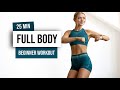
25 MIN FULL BODY HIIT for Beginners - No Equipment - No Repeat Home Workout
Weeks 2-5: Progressive Advancement Strategy
Progressive overload is the most important strength principle for seeing long-term results. During the second week, you should repeat the first week's schedule to solidify your skills. This repetition builds confidence in your technique before you increase the difficulty.
In the third week, aim to increase your resistance by 10-20% if you are using weights. Continue with these new loads through the fourth week to ensure your body fully adapts. By the fifth week, another 10-20% increase will keep your training challenging and effective.
Sample Full-Body Beginner Workout Routine
This bodyweight session is perfect for those with no equipment at home. Perform this routine 2-3 times per week on non-consecutive days. Consistency is the primary driver of your success during these early stages.
| Exercise | Sets | Reps/Time | Rest |
|---|---|---|---|
| Bodyweight Squats | 2-3 | 10-15 reps | 60-90s |
| Incline/Knee Push-ups | 2-3 | 8-12 reps | 60-90s |
| Glute Bridges | 2-3 | 15 reps | 60s |
| Plank Hold | 2-3 | 20-30 seconds | 60s |
Sample Minimal Equipment Workout Plan
If you have access to a pair of dumbbells, this plan offers a great alternative path. These exercises target all major muscle groups while keeping the minutes spent exercising low. Focus on controlled movements to get the best results from every workout.
"The best workout is the one that actually happens consistently in your living room."
| Exercise | Sets | Reps | Rest |
|---|---|---|---|
| Goblet Squats | 3 sets | 8-12 | 60s |
| Dumbbell Rows | 3 sets | 10 per arm | 60s |
| Dumbbell Floor Press | 3 sets | 10-12 | 60s |
| Walking Lunges | 3 sets | 10 per leg | 60s |
Cooling Down and Recovery Strategies
Cooling down helps your heart rate drop slowly and sets the stage for efficient muscle repair. This essential phase allows your blood pressure to stabilize while reducing next-day soreness. Proper periods of rest and transition are what turn your hard work into visible results.
During this time, your body shifts from a state of high stress to a state of growth. Skipping these steps can lead to stiffness and increased fatigue in the coming days. You should treat the cool-down as a non-negotiable part of your fitness schedule.
Post-Workout Foam Rolling for Muscle Recovery
Using a foam roller after your session targets the micro-trauma in your muscle tissue. This tool helps improve blood flow and reduces painful adhesions that form during heavy lifting or intense cardio. You should spend ample time rolling areas that worked the hardest, such as your glutes and quadriceps.
Rolling the thoracic spine also helps improve your posture after sitting all day. Applying gentle pressure to these tight spots releases tension and accelerates the healing process. This technique ensures you are ready for your next training session without lingering tightness.
Static Stretching for Improved Flexibility
Static stretching is highly effective because your muscles are currently warm and pliable. This is the perfect window to achieve lasting changes in your flexibility and joint range of motion. When your muscles are warm, they can lengthen further with a lower risk of injury.
Hold each pose for at least 30 seconds to allow the fibers to relax. This practice helps your body return to a calm, parasympathetic state. Consistency in these movements will eventually allow you to perform deeper squats and better hinges.
"Rest is not idleness, and to lie sometimes on the grass under trees... is by no means a waste of time."
Box Breathing Technique for Restoration
Box breathing is a powerful way to downregulate your nervous system immediately after exercise. To start, sit or lie down in a comfortable position. Breathe in through your nose for 4 seconds, filling your lungs completely.
Hold that breath for 4 seconds, then release it slowly through your mouth for another 4 seconds. Finally, hold your lungs empty for a final 4-second count. Repeating this 5 to 10 times signals to your brain that the "fight or flight" period is over.
Active Recovery Activities to Include
Low-impact activities like walking or swimming help your tissues heal without adding extra stress. These movements improve joint mobility and keep your blood circulating well. Incorporating light walking on your rest days prevents the stiffness that comes from total inactivity.
Yoga is another excellent choice for those looking to balance strength with suppleness. It provides a dual benefit of recovery and mental clarity. Choosing the right recovery activity depends on your energy levels and how your joints feel.
| Recovery Method | Primary Benefit | Best Time to Perform |
|---|---|---|
| Foam Rolling | Reduced Soreness | Immediately Post-Workout |
| Static Stretching | Better Flexibility | When Muscles are Warm |
| Box Breathing | Nervous System Calm | End of Session |
| Active Walking | Increased Circulation | Non-Training Days |
Tracking Progress and Staying Motivated
Keeping a detailed log of your exercise sessions turns vague effort into tangible data for long-term success. You can use the AF App or a simple notebook to record your daily moves and workout history. Seeing your progress improve on paper provides powerful motivation when your physical appearance hasn't changed yet. Documenting your workouts creates immediate accountability for your goals.
Using Fitness Tracking Apps and Technology
Digital tools simplify the logging process for every beginner. Many fitness apps offer free versions to record your sets, reps, and subjective difficulty ratings. These apps allow you to make data-driven decisions about when to increase the intensity of your routine.
Body Composition Scanners for Detailed Insights
Advanced tools like the Evolt 360 offer a deeper look at your body than a standard scale. These scanners measure body fat percentage against muscle mass to show real internal changes. It is common to see temporary weight gain in the first month as you build muscle and bone density. We recommend monthly scans to discuss your results with a professional coach.
Wearable Fitness Technology Benefits

Wearable technology is currently the top global fitness trend with a 17.4% annual growth rate. Heart rate monitoring helps you understand your workout effort and recovery status in real-time. This feedback ensures you are pushing hard enough to see results without overtraining.
The 3-3-3 and 4-2-1 Exercise Rules
The 3-3-3 rule suggests three days of strength training, three days of cardio, and three days of active recovery. If you prefer a faster pace, try the 4-2-1 rule which emphasizes four days of training and two days of cardio. These simple frameworks offer an easy-to-remember structure for your weekly exercise and workouts.
Celebrating Non-Scale Victories
Real progress often appears within the first two or three week intervals. You will notice better sleep, improved mood, and higher energy levels long before the scale moves. These non-scale victories prove that your body is becoming healthier and more functional every single day.
Common Beginner Mistakes and How to Avoid Them
Navigating the early stages of home fitness requires awareness of certain errors that often cause setbacks. By identifying these traps, every beginner can ensure a safer and more effective journey toward their goals. Learning what to avoid is just as important as knowing which exercises to perform.
Skipping Warm-Ups and Cool-Downs
Jumping straight into high-intensity movements with cold muscles is a recipe for trouble. This habit significantly increases your injury risk and lowers the overall quality of your workout. Even five minutes of preparation makes a massive difference in how your body performs.
A proper cool-down is equally vital for recovery and flexibility. Neglecting this phase leads to unnecessary stiffness and discomfort the next day. Always treat your muscle preparation as a mandatory part of the session.
Training with Poor Form and Technique
A common beginner mistake involves prioritizing speed or repetitions over movement quality. Maintaining proper form is vital for long-term health and prevents dangerous compensation patterns. Correct form ensures you target the right areas safely.
Establishing bad patterns early makes them much harder to fix later. Take your time to master each move before adding weight or increasing intensity. Quality will always trump quantity when building a strong foundation.
Overtraining Without Adequate Rest
You might feel tempted to do a training session every day to see fast results. However, exercising for several days without any rest leads to overtraining syndrome and persistent fatigue. A smart rest period allows your body to repair tissues and build strength.
Chronic sleep deprivation also impairs your progress and elevates stress hormones. Most growth happens while you sleep, not while you are active. Use the table below to distinguish between healthy effort and potential harm.
| Signal Type | Physical Sensation | Action Required |
|---|---|---|
| Muscle Fatigue | Dull ache or burning during reps | Continue with caution |
| Acute Pain | Sharp, stabbing, or joint-related | Stop the movement immediately |
| Overtraining | Persistent exhaustion and low mood | Take an extra recovery day |
Setting Unrealistic Expectations
Many people quit their new training plan within two weeks because they don't see instant changes. You build sustainable fitness over months, not just a few days. Give your body enough time to adapt before expecting a dramatic change in the mirror.
Focus on small wins to keep your motivation high. A consistent workout schedule requires patience and a long-term perspective. Use these tips to stay on track:
- Celebrate strength gains rather than just weight loss.
- Listen to your body's signals to avoid burnout.
- Prioritize seven to nine hours of quality sleep nightly.
- Focus on movement quality during every single set.
Supporting Your Workouts with Proper Nutrition
Nutrition acts as the foundation for every physical change you want to see in your body. Exercise and diet work together to improve your overall health. Even a perfect plan fails if you lack the energy to finish your training sets.
Your body needs specific building blocks to adapt to the stress of a new routine. When you eat well, you recover faster and feel more capable during each session. Think of food as the high-quality fuel that keeps your fitness engine running smoothly.
Protein Requirements for Muscle Recovery
Protein serves as the essential building material for your muscle tissue. The International Society of Sports Nutrition recommends eating 1.6 to 2.2 grams of protein per kilogram of body weight. This daily amount supports the repair and growth of lean tissue after a hard workout.
You can easily meet these goals by choosing nutrient-dense whole foods. Incorporating these items into your meals helps ensure consistent recovery without needing expensive supplements. Consider these excellent options:
- Eggs and Chicken: Classic sources of complete amino acids.
- Greek Yogurt and Cottage Cheese: High-protein dairy for quick snacks.
- Fish: Provides healthy fats along with protein.
- Lentils: A fantastic plant-based source of protein and fiber.
Hydration Guidelines Before, During, and After Exercise
Dehydration lowers your physical performance and makes every exercise feel much harder than it should. Drink water consistently throughout the day to keep your levels steady. Experts suggest consuming at least 500ml of water in the two hours before you start moving.
If your session lasts longer than 45 minutes or causes heavy sweating, reach for electrolytes. These minerals replace what you lose through perspiration and prevent cramping. Staying hydrated also speeds up the removal of waste products from your muscles.
Meal Timing for Optimal Performance
Eat a light and easily digestible meal about 60 to 90 minutes before your workout. This meal should focus on carbohydrates with a small amount of protein. This specific combination provides the energy needed for strength and endurance training.
The food you eat can be either the safest and most powerful form of medicine or the slowest form of poison.
Avoiding the Under-Eating Trap
Many beginners try to starve themselves while starting a new routine. This aggressive calorie restriction actually slows your progress significantly. Your body requires adequate calories to rebuild tissue and maintain a healthy metabolism.
Stick to a modest calorie deficit if your goal is weight loss. Avoid dropping too far below your maintenance needs to protect your performance. Eating enough keeps your motivation high and prevents the burnout often associated with new fitness habits.
| Food Source | Protein Type | Primary Benefit |
|---|---|---|
| Greek Yogurt | Animal | Probiotics and high protein content |
| Lentils | Plant | Slow-release energy and fiber |
| Chicken Breast | Animal | Lean tissue repair and low fat |
| Eggs | Animal | Complete amino acid profile for growth |
Conclusion
Your path to a healthier life starts with the first step in your living room. You do not need a fancy gym membership or expensive gear to see real results. True success comes from a solid workout routine and a steady commitment to your fitness journey and personal goals.
Focus on core movement patterns and basic training principles like progressive overload. A simple plan that you follow consistently is better than a perfect one you ignore. Try starting with short sessions of thirty minutes just a few times each week to build a strong habit.
During the first few weeks, look for small wins like better sleep or increased strength. These non-scale victories keep every beginner motivated while the body changes. Every beginner faces challenges, but returning after a missed workout is what leads to long-term health.
The most important step is simply to begin right now. Use your home workout plan and start Day 1 today. Your new fitness routine begins the moment you decide to move.
No comments